
Every November I get some version of the same message. It usually arrives with a slightly guilty tone:
“My grandmother’s Christmas cactus used to bloom like crazy. Mine just… sits there. What am I doing wrong?”
You’re probably not doing anything wrong. You’re doing something too comfortable. Your plant lives in a warm, well-lit, cozy house — and that’s exactly the problem.
Let me walk you through what’s really going on, and how to get buds even if you’re reading this in the middle of November.
Holiday cacti don’t bloom because of a fertilizer trick or a magic cup of anything. They bloom because of two signals:
- Cool nights — temperatures in the 50s°F are the strongest trigger.
- Long, truly dark nights — roughly 13 hours or more of uninterrupted darkness.
Give the plant the right combination for about six weeks, and it gets the message: winter is coming, time to flower.
In the low-to-mid 50s, most plants set buds no matter how long the nights are. From the upper 50s into the mid-60s, they need both the coolness and the long dark nights. Above about 70°F, many barely bud at all, even in the dark.
That’s the secret your grandmother knew without knowing she knew it. Her plant probably sat in a drafty window in a house that ran a lot cooler at night than ours do now.
First, figure out which “Christmas” cactus you actually have
This one surprises almost everybody. Many plants sold as “Christmas cactus” in big-box stores are actually Thanksgiving cactus. They look nearly identical until you check the flat, leaf-like segments.
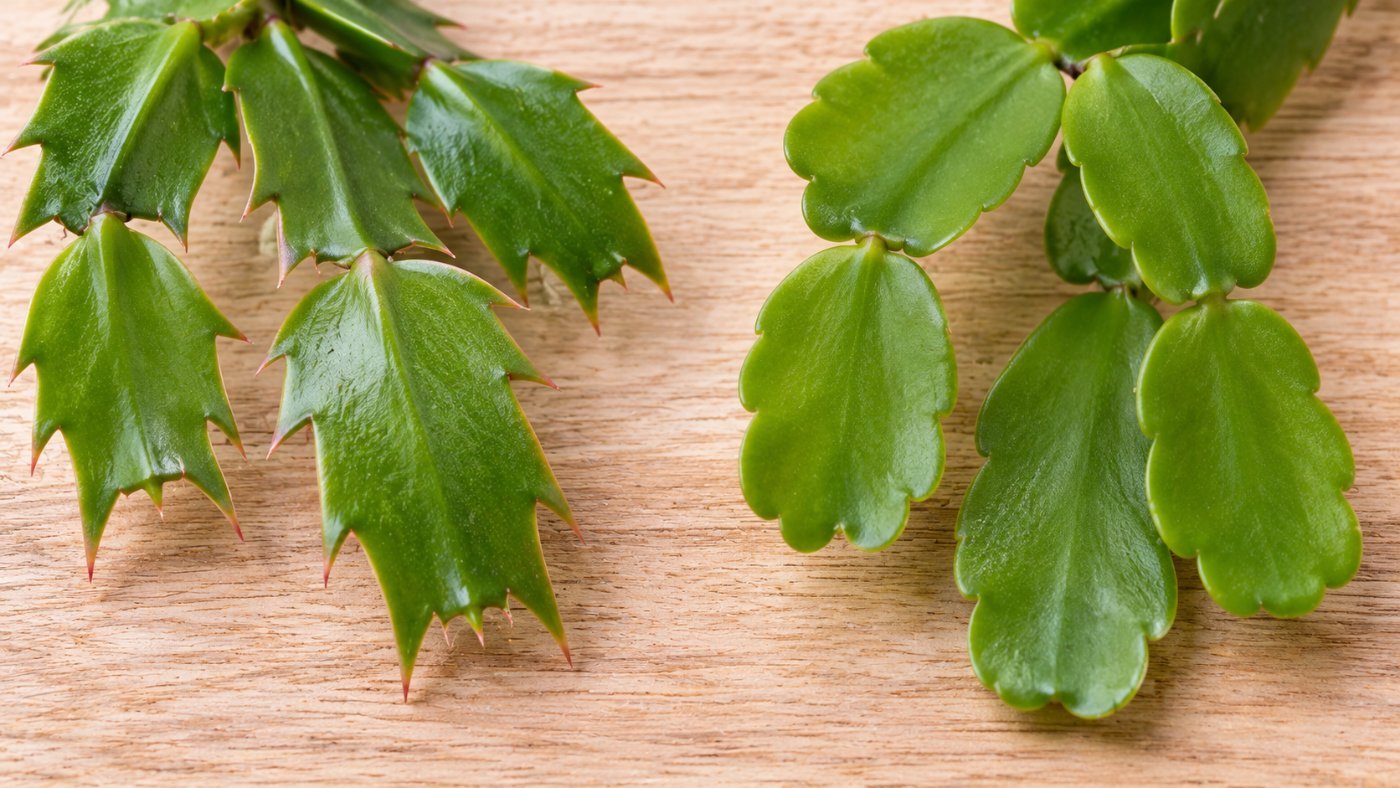
| Plant | How to spot it | Natural bloom time |
|---|---|---|
| Thanksgiving cactus Schlumbergera truncata | Sharp, pointy “teeth” on segment edges, like little crab claws | Around late November |
| Christmas cactus Schlumbergera × buckleyi | Smooth, rounded, scalloped edges | Mid-to-late December |
| Easter cactus Rhipsalidopsis gaertneri (also sold as Hatiora or Schlumbergera gaertneri) | Rounded segments with tiny bristles at the tips; star-shaped flowers | Spring |
Why it matters: if you own a Thanksgiving cactus and it’s flowering right now, nothing’s wrong. If you own an Easter cactus, no amount of November coaxing will turn it into a holiday centerpiece — it isn’t broken, it’s on a different calendar.
These “cactus” don’t act like cactus
The mental shift that fixes most problems: this is not a desert plant.
Holiday cacti come from the coastal mountain forests of southeastern Brazil, where they grow on trees — tucked into mossy branches the way orchids do. Botanists call that an epiphyte. Picture humid air, filtered light, chunky debris around the roots, and rain that drains away fast.
Treat one like a desert cactus (blazing sun, bone-dry for weeks) or like a fern (constantly soggy) and it struggles. The sweet spot sits in between.
The 6-week bloom plan
If your plant has no buds yet, start today. Be realistic about timing: if you begin in mid-November, buds usually show up in mid-to-late December and flowers open somewhere between January and early February. Not quite Christmas morning — but a plant blooming in the gray heart of January is its own kind of gift.

Option A: The cool-room method
Easiest for most people. Move the plant somewhere that stays in the 50s at night — aim for the mid-to-upper 50s: an unheated guest room, a cool sunroom, a bright spot near a cold window, a basement stairwell with a window. In that range it tends to set buds even without strict dark control.
Option B: The dark-night method
If you can’t find a cool spot. Give it 13–14 hours of total darkness every night for about six weeks — a closet from 6 p.m. to 8 a.m., or a cardboard box over the top. Bright, indirect light by day. Works best if the room stays below the mid-60s.
Don’t overdo the chill. At 50°F or below, buds may drop, and you should keep the plant above about 45°F. In Zones 3–5 a windowsill can fall into the 30s on a January night, and segments pressed against frosty glass can be damaged. If your window gets icy, pull the plant back a foot or two.
Darkness means darkness. A porch light through the window, a TV across the room, the glow from a hallway — any of those can break the long night. If you’ve been “doing the dark thing” and nothing happened, do a quick night-light audit after sunset. It’s usually the culprit.
During the six weeks
- Water a little less until buds appear, letting the top inch or so of the mix dry between waterings. Once buds show, keep the mix evenly moist (never soggy) — drying out is a common cause of bud drop.
- Stop fertilizing.
- Once you see buds, stop moving it around.
Why buds fall off (and how to stop it)

Few things hurt more than a plant covered in pink buds… that drops them all on the carpet a week later. Bud drop almost always comes down to sudden change:
- moving the plant from a cool room to a warm one in a single day,
- a blast from a heating vent or a cold, drafty door,
- swinging from bone-dry to soaking wet,
- or simply turning or relocating it a lot after buds form.
Bright, indirect light and steady temperatures in the 60s Fahrenheit keep flowers open longer. Warm, dry air near a radiator shortens the show.
About that “one cup a week” advice
You’ll see popular videos promising that a cup of something — water, rice water, coffee, an Epsom salt mix — will make your plant explode with blooms. I get the appeal. A simple ritual feels good.
But the amount of water your plant needs depends on pot size, potting mix, light, and humidity. A cup a week might be perfect for a 6-inch pot in a bright room and far too much for a small pot in a cool, dim one. Cool rooms dry out slowly, and that’s exactly where people accidentally rot roots — usually during the very weeks they’re trying to trigger blooms.
Some growers swear by a light magnesium boost (Epsom salt) during the growing season. That’s mostly grower experience rather than solid research, so if you try it, keep it mild and limit it to spring and summer. No additive will ever replace a plant’s need for long, cool nights.
The year-round rhythm
Follow this and fall becomes easy — the plant does most of the work.
| Season | What to do |
|---|---|
| After blooming (late winter) | Rest for about a month: water lightly, no fertilizer. Pinch off a segment or two at the tips — each break tends to branch, and more tips means more buds next winter. |
| Spring | Repot only if needed (every few years is plenty). Use a fast-draining mix — cactus/succulent mix lightened with orchid bark or perlite. |
| Summer | Bright, indirect light; dappled shade outdoors is great. Half-strength balanced houseplant fertilizer once a month, then stop by late summer. |
| Fall | Bring it inside before nights drop into the 40s and start the cool/dark routine. |
What I’ve learned the hard way

- Free plants are hiding in your pinchings. Let a 3–5 segment cutting dry for a day or two, then tuck it about an inch deep in barely moist mix. A rooted cutting from a family plant is one of the best gifts you can give someone.
- Red or purple-tinged segments usually mean a bit too much direct sun, or stress from cold or dryness. Move it to softer light and check the watering.
- Limp, wrinkled segments can mean either too dry or root rot from too wet. Check the roots first: healthy roots are white or tan and firm; rotten ones are dark and mushy.
- Old plants are worth saving. Holiday cacti can live for decades. If an old family plant is struggling, a rooted cutting is your insurance policy.
Zone-by-zone tips
| Zone | What to know |
|---|---|
| 3–5 | Cold windows are a free bud trigger, but can be too cold. Aim for nights in the mid-to-upper 50s, keep it above 45°F, and never let segments touch frosty glass. |
| 6–8 | An unheated spare room, enclosed porch, or cool basement window usually hits the target range in November and December. Watch for heating vents. |
| 9–10 | If fall nights run in the 50s, a covered, shady spot outdoors may bud the plant for you. The trap: moving a budded plant straight into a warm house — a classic recipe for bud drop. Move it gradually, to your coolest room. |
The ASPCA lists holiday cacti as non-toxic to cats and dogs. A curious pet might still get an upset stomach from chewing any plant, but you don’t need to panic or banish it.
Walk over to your plant after dark and look at it with the room lights on. If it’s sitting under lamplight every evening, there’s your answer. Move it somewhere cool and dark at night, starting tonight, and give it six weeks.
That’s how a plant that “never blooms” becomes the one your kids argue over someday.
Sources & further reading
- University of Minnesota Extension — Holiday cacti
- University of Illinois Extension — Getting holiday cacti to rebloom
- Clemson Cooperative Extension (HGIC 1554) — Thanksgiving & Christmas Cacti
- Royal Horticultural Society (RHS) — Christmas cactus care
- ASPCA — Toxic and Non-Toxic Plants List