There’s a moment every fall when most gardeners quietly give up. The tomatoes are gone, the beds look tired, and it feels like the season is officially over.
I want to talk you out of that.
November is one of the most profitable planting months of the year. Not because you’ll harvest much right now, but because what goes into the ground this month comes up months ahead of anything you could plant in spring. It’s a free head start. And the star of the show costs a few dollars and practically grows itself.
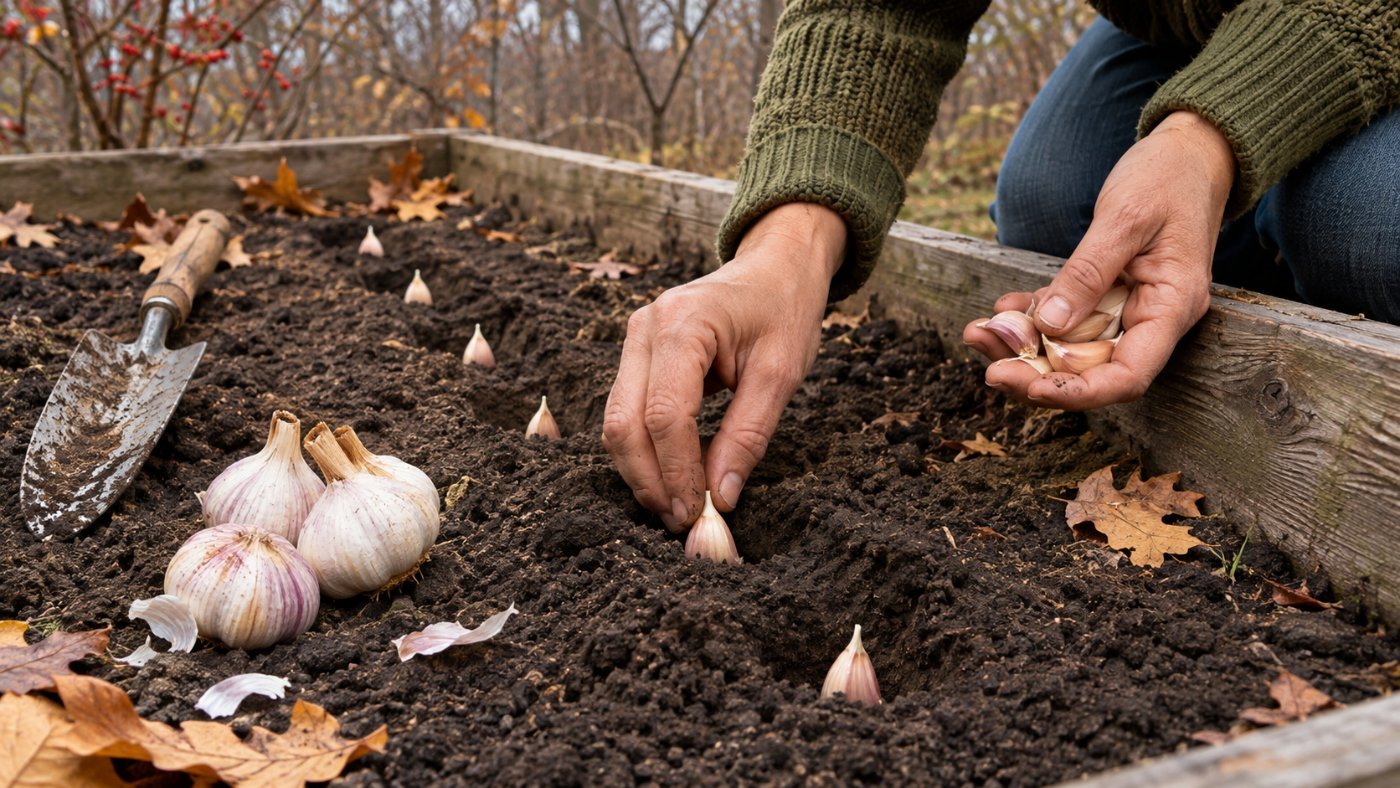
Yes — November is still planting season. Garlic is the best bet: plant cloves pointy end up about 2 inches deep and 4–6 inches apart, a few weeks before the ground freezes, and mulch in cold zones.
Shallots, spring bulbs, overwintering spinach and (in milder zones) cereal rye can go in too. In Zones 8b–10, November is prime planting time.
Garlic: the November crop
If you plant one thing this month, make it garlic.
Garlic needs a long cold spell to form a proper bulb. Plant it in fall and it quietly builds roots all winter, sends up green shoots in early spring, and is ready to dig in early-to-mid summer. Plant it in spring instead and you’ll usually get noticeably smaller heads — sometimes even undivided, single-clove “rounds.”
When to plant
The best timing is after the soil cools but a few weeks before the ground freezes hard. That gives the cloves time to root without pushing much top growth.
- Cold regions (roughly Zones 3–5): October is ideal. If your ground isn’t frozen yet, plant now — this week, not next — and mulch right away (more on that below).
- Middle zones (6–7): Late October through November is the sweet spot.
- Warm zones (8–10): November into December, and in the warmest places, even later. Garlic here needs chill it may not get from the weather, so many growers put their cloves in the refrigerator first: about 40°F for 6–8 weeks, in a paper bag, away from fruit (ripening fruit gives off ethylene, which can mess with sprouting). In Zones 9–10, stick with softneck types.
Rule of thumb that works almost anywhere: if you can still push a trowel into the soil, you can still plant garlic.
One honest heads-up: popular seed garlic varieties often sell out by October. If your usual source is empty, check local farmers markets, garden centers, and small garlic farms — many keep a little stock into November.
Pick the right type
This is where beginners often lose the harvest before they’ve started.
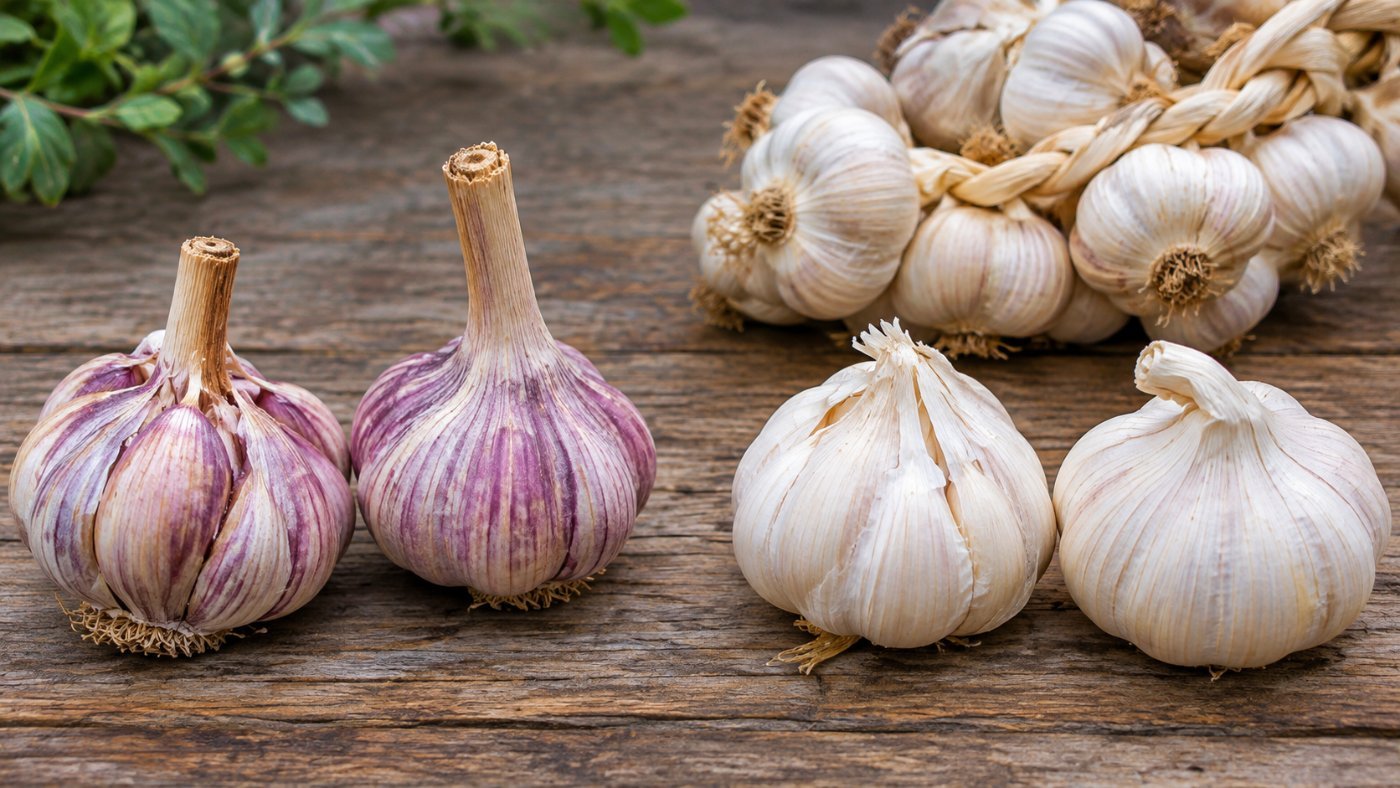
- Hardneck garlic (Music, German Extra Hardy, Chesnok Red and many others) handles bitter cold well and produces garlic scapes in late spring — a delicious bonus crop. Best for the North.
- Softneck garlic (the kind usually sold in supermarkets) stores longer and handles mild winters better. Usually the better pick in the South and on the West Coast.
Skip the grocery-store garlic. It may be treated to slow sprouting and is often grown in a very different climate. The bigger reason: it can carry diseases and pests like white rot and bulb nematodes — and once those get into your soil, they can stick around for years and ruin future onion-family crops. Certified or clean seed garlic costs more up front, but you’re buying a crop, not a condiment.
How to plant it
- Break the bulb into cloves the day you plant, not weeks before. Keep the papery skins on.
- Plant the biggest cloves. Big cloves make big bulbs. Cook the little ones.
- Plant pointy end up, flat end down, about 2 inches deep (go 2–3 inches in very cold climates).
- Space cloves about 4–6 inches apart, in rows roughly a foot apart.
- Water once to settle the soil.
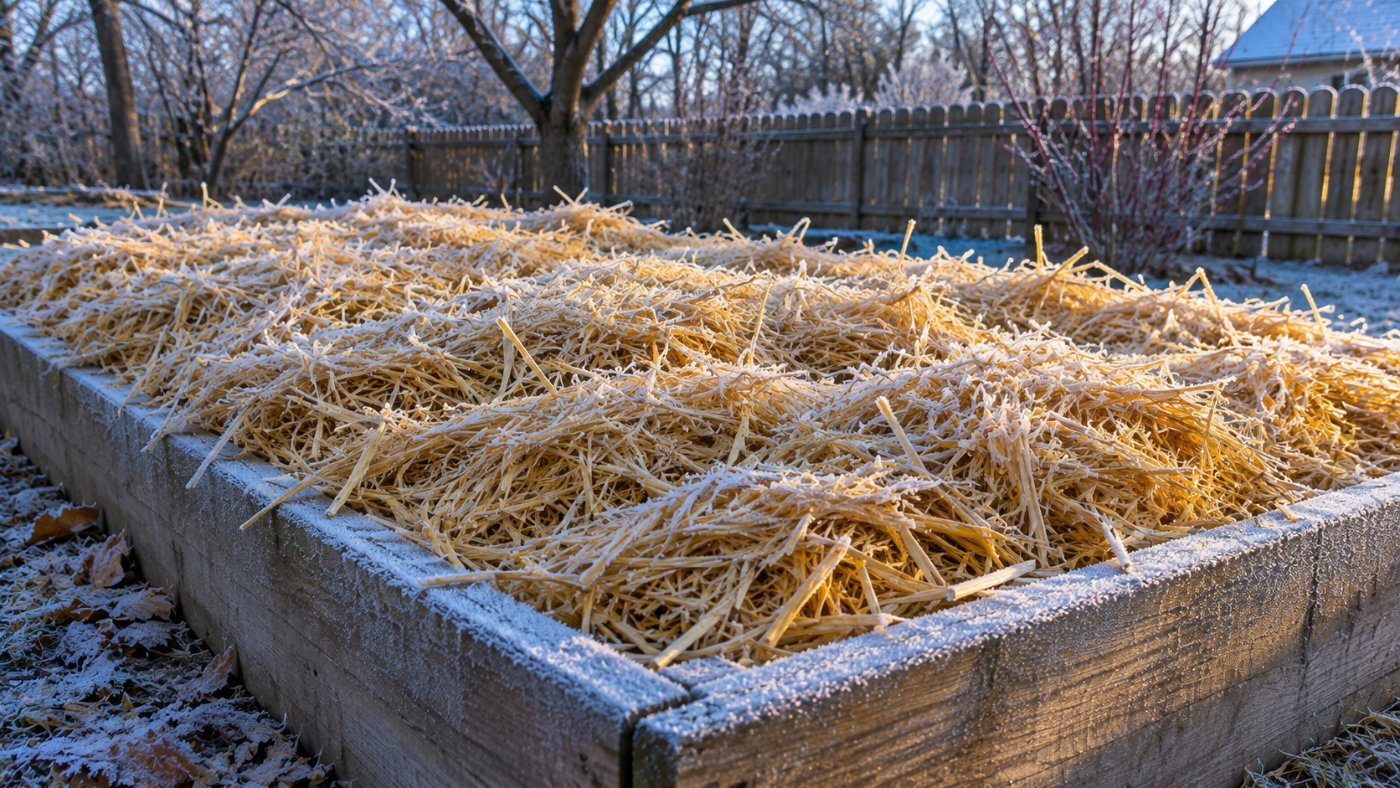
- In cold zones, cover the bed with 4–6 inches of mulch — straw (not hay, which is full of weed seed) or shredded leaves. Normally you’d wait for the ground to chill before mulching, but if you’re planting late in Zones 3–5, mulch immediately. It keeps the soil from freezing and thawing over and over, which can heave young cloves right out of the ground. In spring, pull some back once shoots are up and growing.
The money part
I call garlic a “profitable” crop for a reason. Every clove grows into a whole bulb. A pound of seed garlic commonly returns several pounds at harvest — roughly four to seven times for many hardneck types, and often more for softnecks. Save your biggest bulbs each summer for replanting and you may never need to buy seed garlic again. A small bed can keep a family in garlic for much of the year, and well-cured garlic keeps for months.
That’s a real, compounding return from one afternoon of work.
What else you can still plant in November
Whether these work for you depends on your zone and how hard your winter gets, so I’ve grouped them simply.
Most areas (as long as the ground isn’t frozen)
- Shallots and multiplier onions — planted much like garlic. They overwinter and multiply.
- Spring-flowering bulbs — tulips, daffodils, crocus, alliums. Not food, but your spring self will thank you. Daffodils and alliums are generally left alone by deer and squirrels; tulips and crocus are favorites, so plant those where you can protect them. (Zones 9–10: tulips need 6–10 weeks in the refrigerator first and are usually planted in December or January.)
A note on cover crops
Cereal rye is one of the latest cover crops you can sow. It holds bare soil over winter, soaks up leftover nutrients, and becomes great organic matter in spring. The catch: the later you sow, the less it grows before winter. In Zones 3–5 it’s generally too late now. In Zones 6–7, a November sowing can still work — sow it thicker (roughly double the usual rate) and treat whatever comes up as a bonus. In milder zones, you’re right on time.
Two rye rules people learn the hard way: cut it down before it forms seed heads in spring, and wait 3–4 weeks after cutting before direct-sowing small seeds like carrots or lettuce, because rye residue can suppress germination. Transplants don’t mind.
Mild-winter areas (roughly Zones 7–8, with some protection)
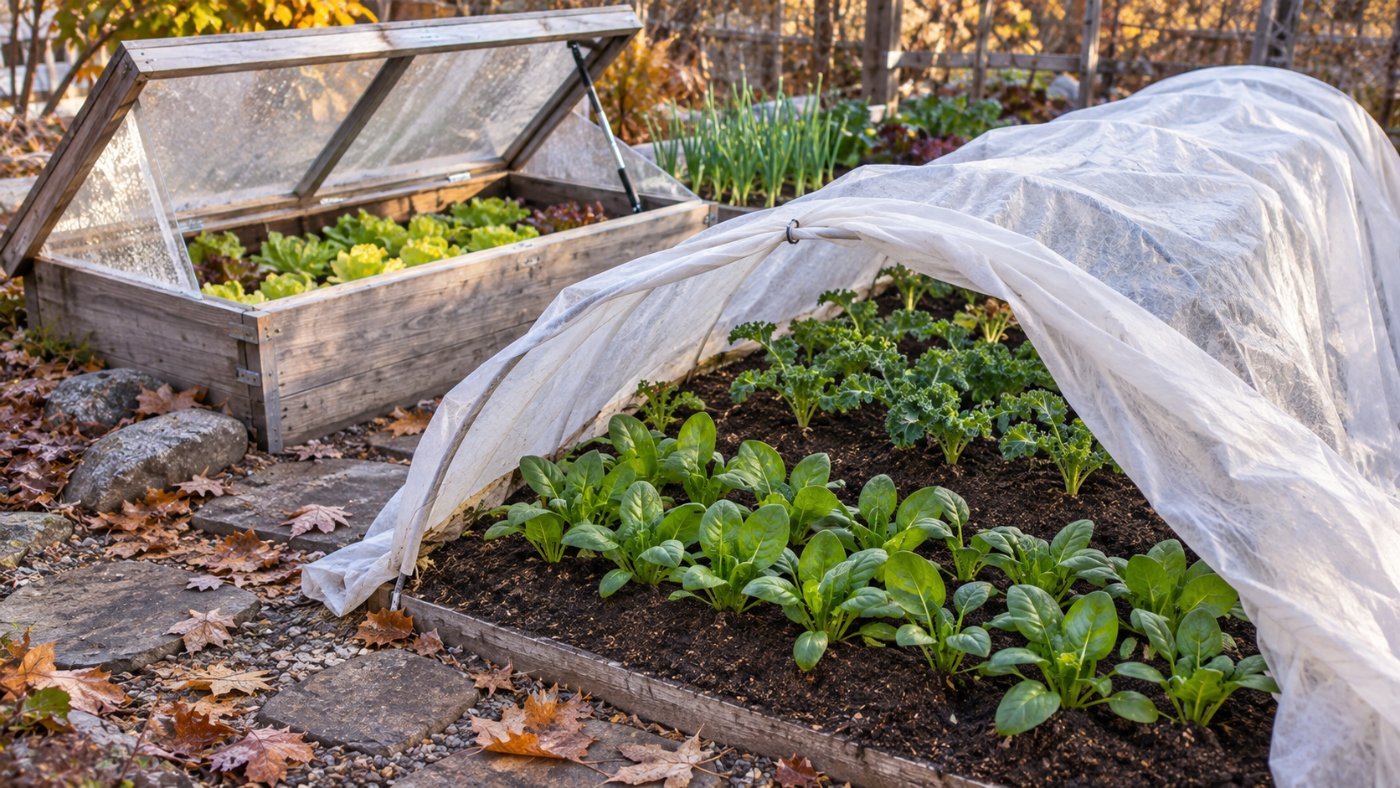
- Spinach sown now often overwinters as small plants, then takes off as soon as days lengthen. It can be your earliest salad of the year.
- Hardy greens under cover — kale, mâche (corn salad), arugula and lettuce can hang on with a row cover or cold frame.
Warm-winter areas (roughly Zones 8b–10)
November is prime planting season, not the end of it. Lettuce, spinach, radishes, carrots, beets, peas, kale, chard, broccoli and cabbage transplants, cilantro, dill, parsley — this is the best time of year for most of them. Watch for the occasional cold snap and keep a frost cloth handy.
Northern gardeners (Zones 3–6): “dormant seeding”
Most people have never heard of this trick. Some hardy, cold-loving crops — spinach, lettuce, kale and some herbs — can be sown once the soil stays below about 40°F, cold enough that the seeds won’t sprout until spring. They sit dormant and germinate on their own schedule as soon as conditions allow, often earlier than you could have planted by hand. It doesn’t win every year, but seed is cheap and the payoff can be a surprisingly early harvest.
The insight most people miss
Gardeners tend to think of the year as “season” and “off-season.” The soil doesn’t see it that way.
What you do in November — planting garlic, sowing a cover crop, mulching a bed, dropping in a few bulbs — decides how early and how easy your next season will be. The gardeners who always seem to be harvesting before everyone else aren’t luckier. They planted while everyone else was raking leaves and calling it a year.
As grocery prices keep climbing, that head start is worth more than ever. Garlic, onions, greens and herbs are exactly the things that add up fast at the checkout.
Common mistakes to avoid
- Planting garlic upside down. Roots come from the flat end. It’ll usually find its way, but you’ll lose energy and size.
- Mulching too early in mild zones. Where the ground stays soft, heavy mulch over warm soil can invite rodents and rot. (Cold-zone late planters: mulch now, as above.)
- Planting in soggy soil. Garlic hates wet feet over winter. Raised beds or well-drained spots are best.
- Forgetting to label. By spring you won’t remember which row is which. Ask me how I know.
Zone-by-zone quick guide
| Zone | What to know |
|---|---|
| 3–5 | Plant garlic immediately if the ground is workable and mulch the same day. Too late for cover crops; try dormant seeding once soil stays below 40°F. |
| 6–7 | Prime garlic and shallot time. Thick-sown cereal rye can still go in. Spinach under cover. |
| 8 | Garlic, shallots, spinach and hardy greens. Cool-season crops with a frost cloth on standby. |
| 9–10 | Pre-chill softneck garlic for 6–8 weeks before planting. Full cool-season vegetable planting is on. Chill tulip bulbs for December–January planting. |
Check the 10-day forecast. If your soil isn’t frozen, get one or two heads of seed garlic this week and put them in the ground. It takes about twenty minutes. Next summer you’ll pull up something you grew from almost nothing — and you’ll have the start of your own garlic seed stock for years to come.
Sources & further reading
- University of Minnesota Extension — Growing garlic in home gardens
- Cornell Cooperative Extension, Cornell Vegetable Program — Garlic resources
- Oregon State University Extension — Fall is the best time to plant garlic
- Texas A&M AgriLife Extension — Garlic (warm-climate planting)
- USDA Plant Hardiness Zone Map
- Sustainable Agriculture Research and Education (SARE) — Managing Cover Crops Profitably (cereal rye)